In traditional Western art, ancient Greek sculpture has a high status. Greek art has the characteristics of idealism, elegance and refinement, and expresses the beauty of existence in external forms. Ancient Greek myths and legends are the sources of ancient Greek sculpture art. It is the interpretation of the Greeks on the combination of nature and society. Thus expressing the most idealised art form.
Ancient Greek sculpture represents one of the most influential artistic traditions in Western civilization, shaping the foundations of classical aesthetics, anatomy, and idealized human form. Its development can be broadly divided into three major historical periods—Archaic, Classical, and Hellenistic—each reflecting a distinct stage in the evolution of artistic style, cultural values, and technical achievement. Understanding these phases is essential to fully appreciate the masterpieces of ancient Greek sculpture history and the legacy of classical Greek art.
What are the periods of Greek sculpture?
The Archaic period (c. 700–480 BC) marks the early development of Greek sculpture. Works from this era are often rigid and symmetrical, heavily influenced by Egyptian art. Figures such as kouros (youthful male statues) and korai (draped female statues) display a frontal stance, stiff posture, and the characteristic “Archaic smile.” Although anatomically simplified, this period established the foundational pursuit of ideal human proportion and monumental stone carving in Greek art.
The Classical period (c. 480–323 BC) is widely regarded as the pinnacle of classical Greek art. During this time, sculptors achieved a breakthrough in naturalism, balance, and anatomical accuracy. The introduction of contrapposto—where the body weight shifts naturally onto one leg—brought a sense of movement and lifelike presence. Artists such as Phidias, Polykleitos, and Praxiteles refined the ideal male and female forms, emphasizing harmony, proportion, and restrained emotion. Masterpieces from this era express calm confidence, intellectual clarity, and idealized beauty.
The Hellenistic period (c. 323–31 BC) followed the conquests of Alexander the Great and introduced a dramatic shift in artistic expression. Hellenistic sculpture is characterized by heightened emotion, dynamic movement, and psychological realism. Instead of idealized perfection alone, artists explored suffering, ecstasy, tension, and narrative complexity. Sculptures such as the Laocoön Group and Winged Victory of Samothrace exemplify this dramatic intensity, with swirling compositions and deeply expressive figures.
Together, these three periods form the core evolution of Greek sculpture—from rigid beginnings, to balanced perfection, to emotional dynamism. This progression not only defines ancient Greek sculpture history, but also establishes the visual language that later Roman, Renaissance, and Neoclassical art would continuously reinterpret and admire.
Greek statues have long been admired for their remarkable attention to detail, expressive features, and elegant postures. This article presents the most important and well-known works of sculpture from Ancient Greece.
1. Hermes & Infant Dionysus
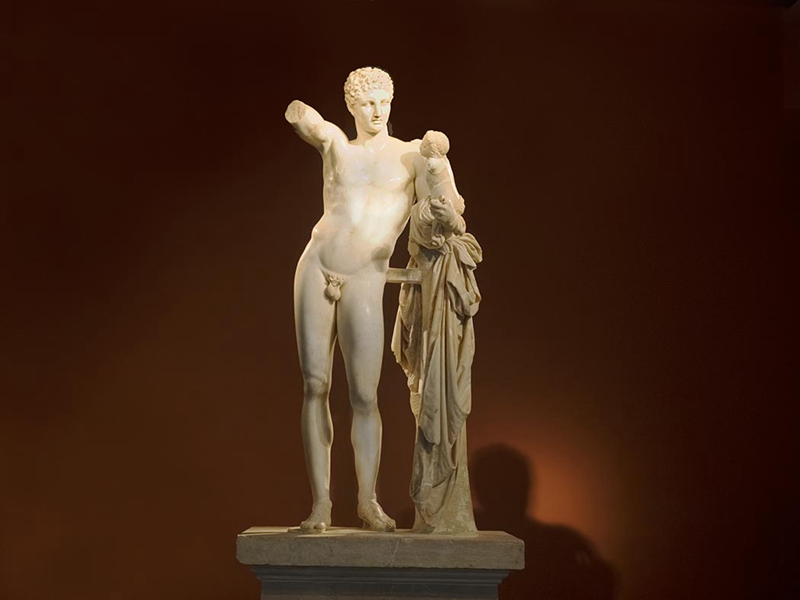
Hermes & Infant Dionysus is a famous Ancient Greek sculpture attributed to Praxiteles, dating back to the 4th century BC and discovered at the Temple of Hera in Olympia. The work represents a transitional moment in Classical art, moving toward a softer, more naturalistic and emotionally expressive style.
The sculpture depicts Hermes resting while gently holding the infant Dionysus on his arm, capturing a quiet moment from Greek mythology when Hermes was carrying the child to be raised by nymphs. The composition uses contrapposto to create a relaxed, flowing posture, while the subtle smile of Hermes and the tender interaction between the figures highlight a rare sense of warmth and humanity in divine representation. This masterpiece greatly influenced later Classical and Renaissance artists in their pursuit of idealized human beauty and natural movement.
2. Riace Bronzes
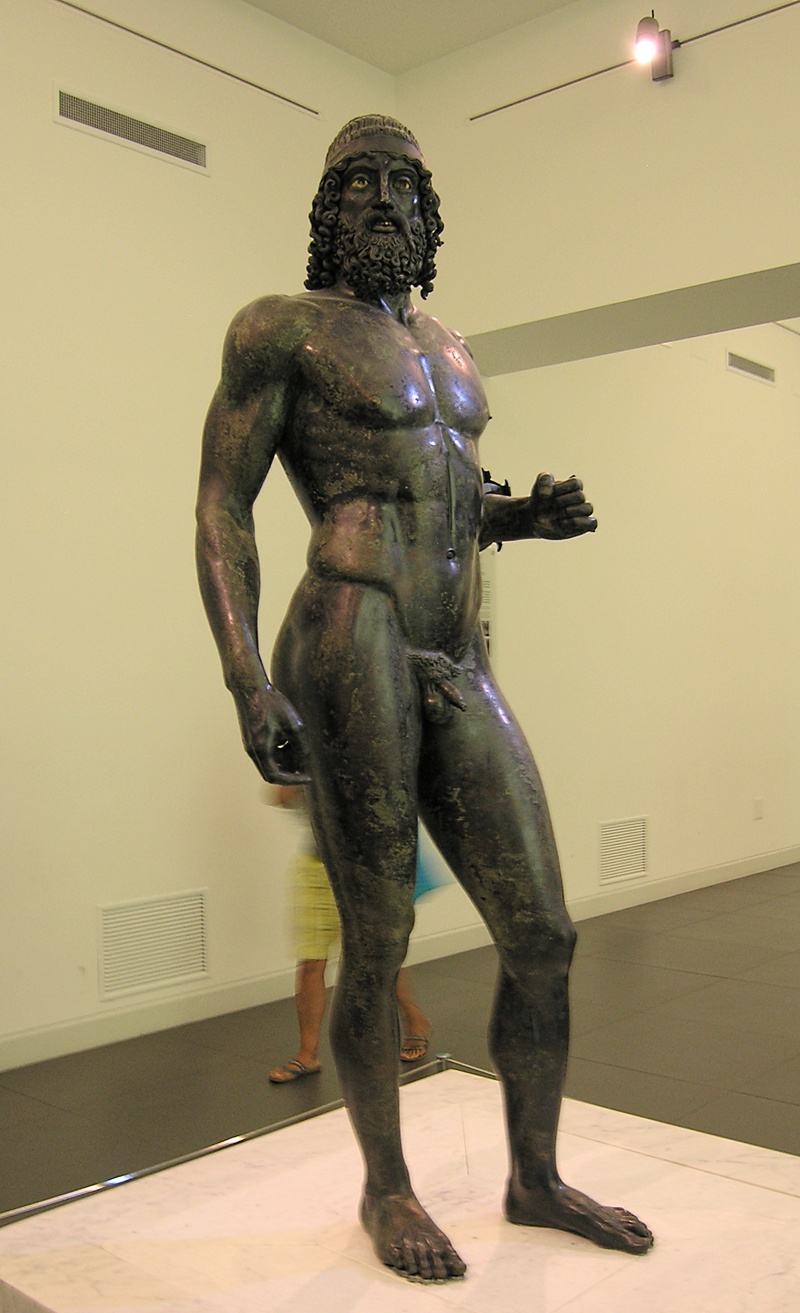
The Riace Bronzes are two life-sized Greek bronze warrior statues dating from around the 5th century BC, discovered off the coast of Riace in southern Italy in 1972. They are considered among the finest surviving examples of ancient Greek bronze sculpture, likely representing idealized heroic figures from the Classical period.
The two figures display remarkable anatomical precision, with highly detailed musculature, natural contrapposto poses, and carefully inlaid eyes, teeth, and even remaining traces of eyelashes made from silver and copper. Their relaxed yet powerful stances reflect the Classical Greek pursuit of balanced ideal beauty—combining physical perfection with calm self-control.
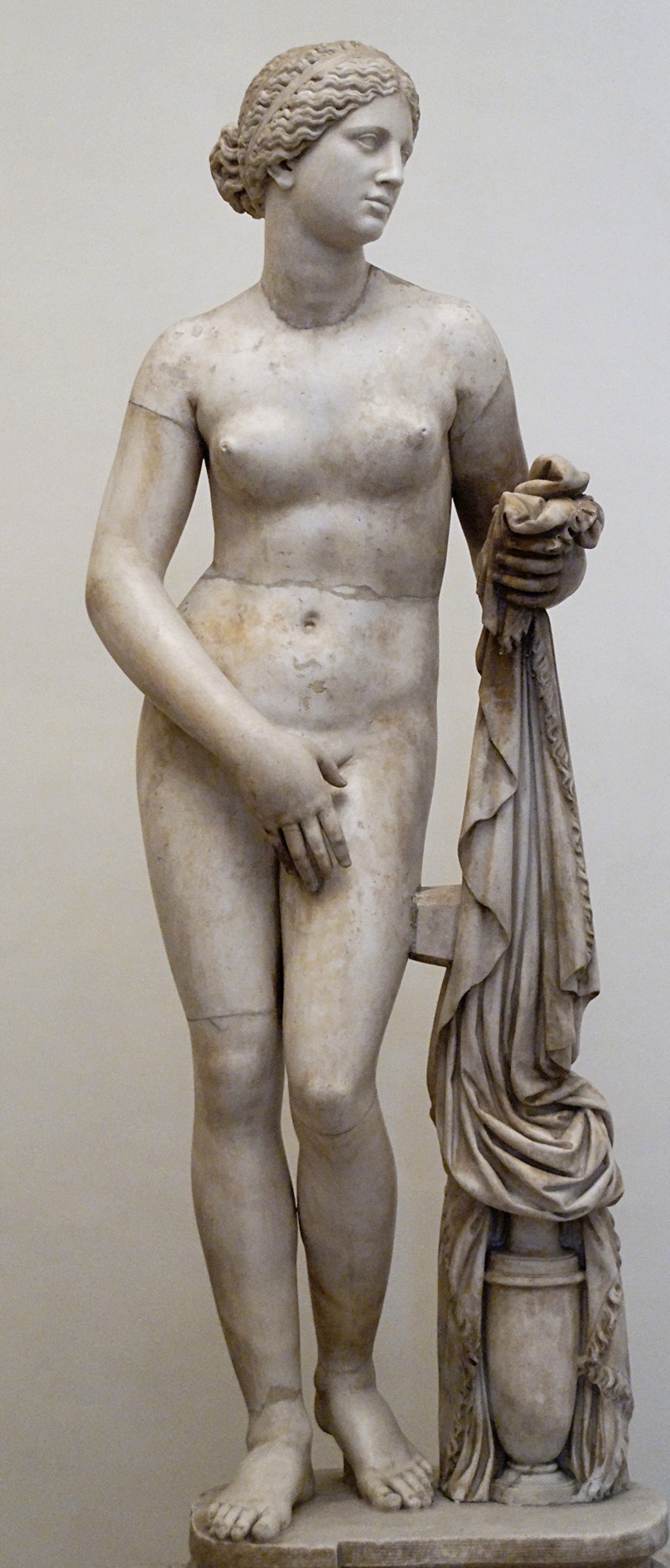
3. Aphrodite of Knidos
The Aphrodite of Knidos is one of the most famous ancient Greek sculptures, created by Praxiteles around the 4th century BC. It is widely regarded as the first large-scale statue in Greek art to depict the goddess Aphrodite fully nude, marking a major turning point in the representation of the female form in Classical sculpture. The original bronze version is lost, but numerous Roman marble copies preserve its composition and style.
The sculpture portrays Aphrodite in a moment of modesty and naturalism, as she prepares for a ritual bath. Her gesture of covering herself partially with her hands introduces the concept of “modest nude,” combining vulnerability with divine beauty. The contrapposto stance, soft body modeling, and idealized proportions reflect Praxiteles’ signature style, emphasizing sensuality balanced with elegance and restraint.
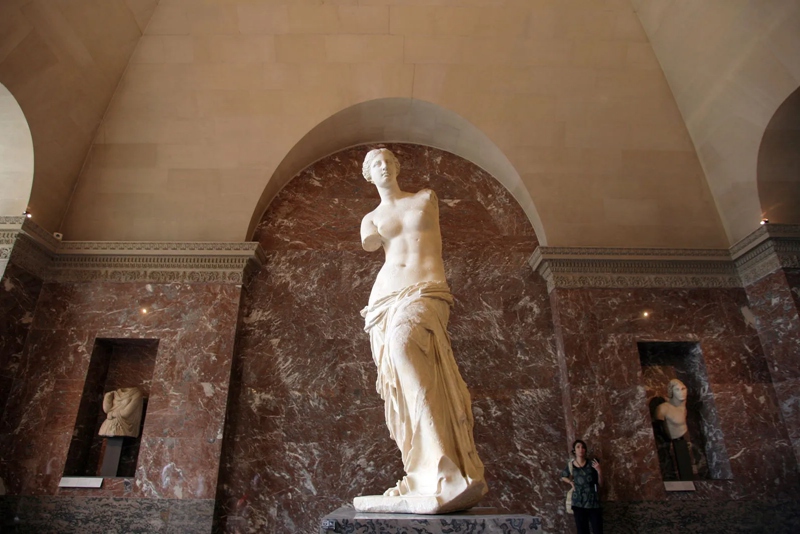
4. Venus de Milo
The Venus de Milo is one of the most celebrated ancient Greek sculptures, created around 150–125 BC during the Hellenistic period and discovered in 1820 on the island of Milos (Melos), Greece. It is widely believed to represent Aphrodite, the Greek goddess of love and beauty, though some scholars suggest it may depict Amphitrite, a sea goddess worshipped on Milos.
The statue is renowned for its graceful composition and idealised female form. Standing in a subtle contrapposto pose, the figure combines classical harmony with Hellenistic dynamism, especially in the twisting of the torso and the flowing drapery that partially covers her lower body. Although the arms are missing, the sculpture’s sense of balance and elegance remains striking, emphasising timeless beauty through proportion and movement.
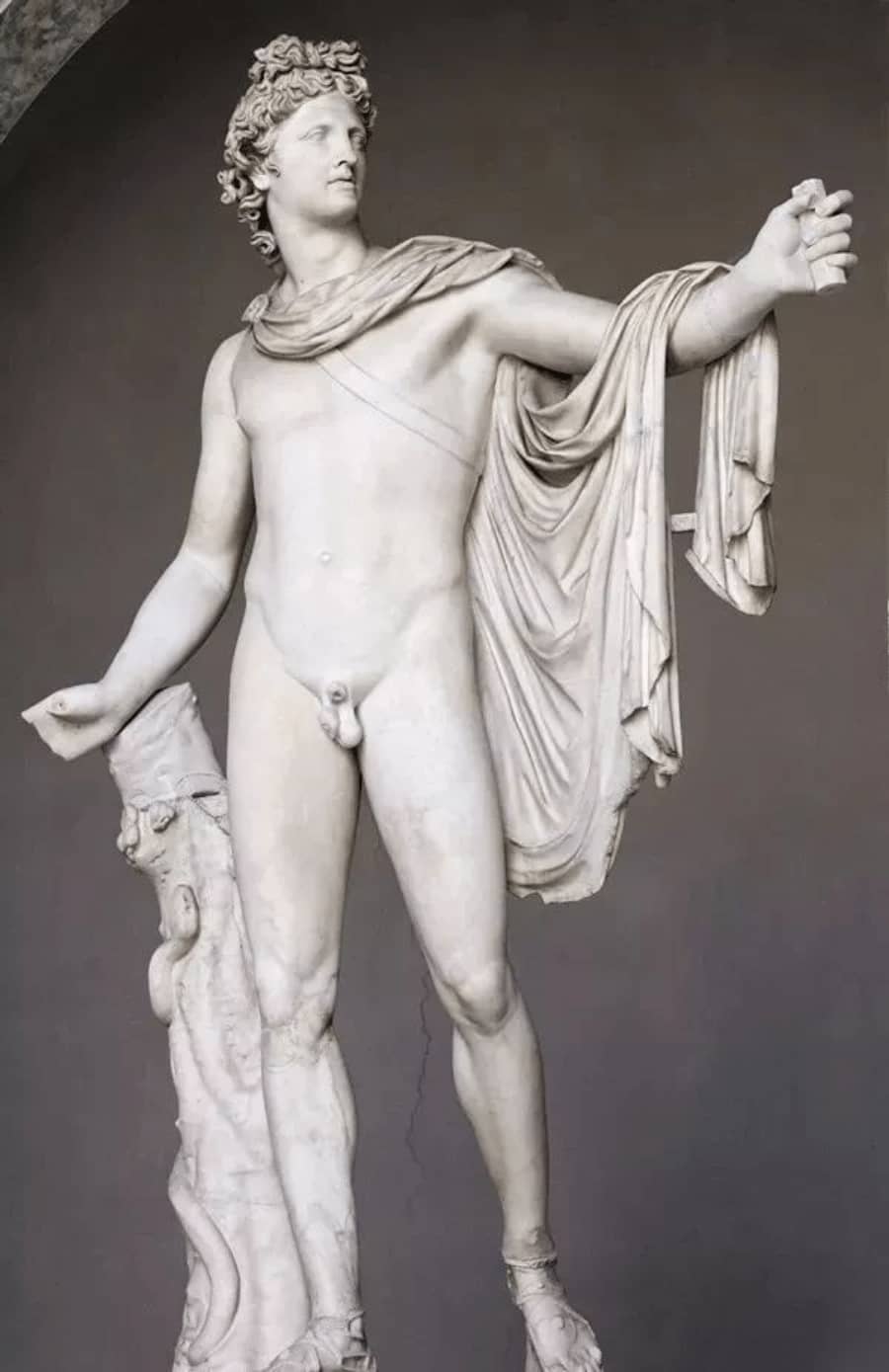
5. Apollo from the Belvedere
The Apollo Belvedere is a renowned Roman marble statue, believed to be a copy of a lost Greek bronze original attributed to the sculptor Leochares, dating from the 4th century BC. It was rediscovered during the Renaissance and later placed in the Vatican’s Belvedere Courtyard, where it gained its famous name. The sculpture depicts Apollo, the Greek god of the sun, music, and archery, in a moment of triumphant motion.
The figure is shown stepping forward with a light, almost weightless posture, having just released an arrow from his bow. His body follows an idealized contrapposto, with perfectly balanced proportions, flowing hair, and a calm yet commanding expression. The detailed rendering of the anatomy and the sense of controlled movement reflect the Classical Greek pursuit of ideal human perfection combined with divine authority.
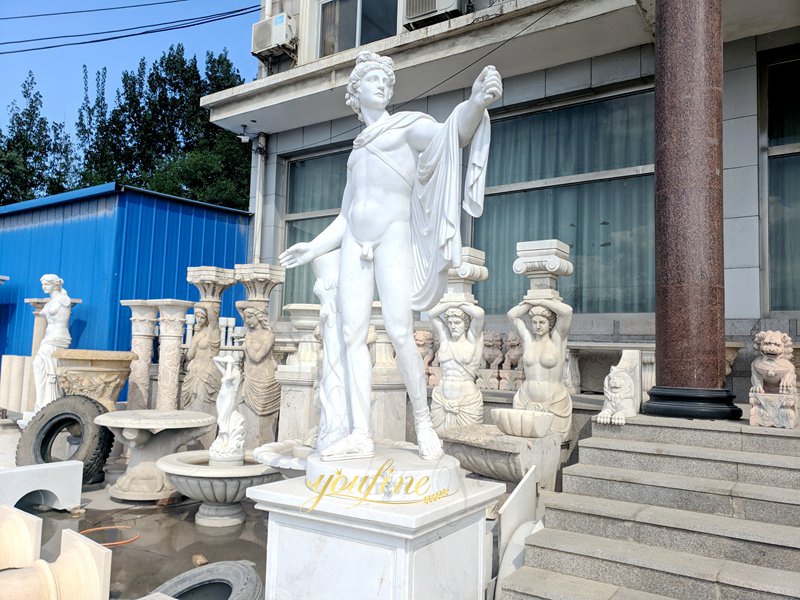
Apollo statue from the Belvedere replica
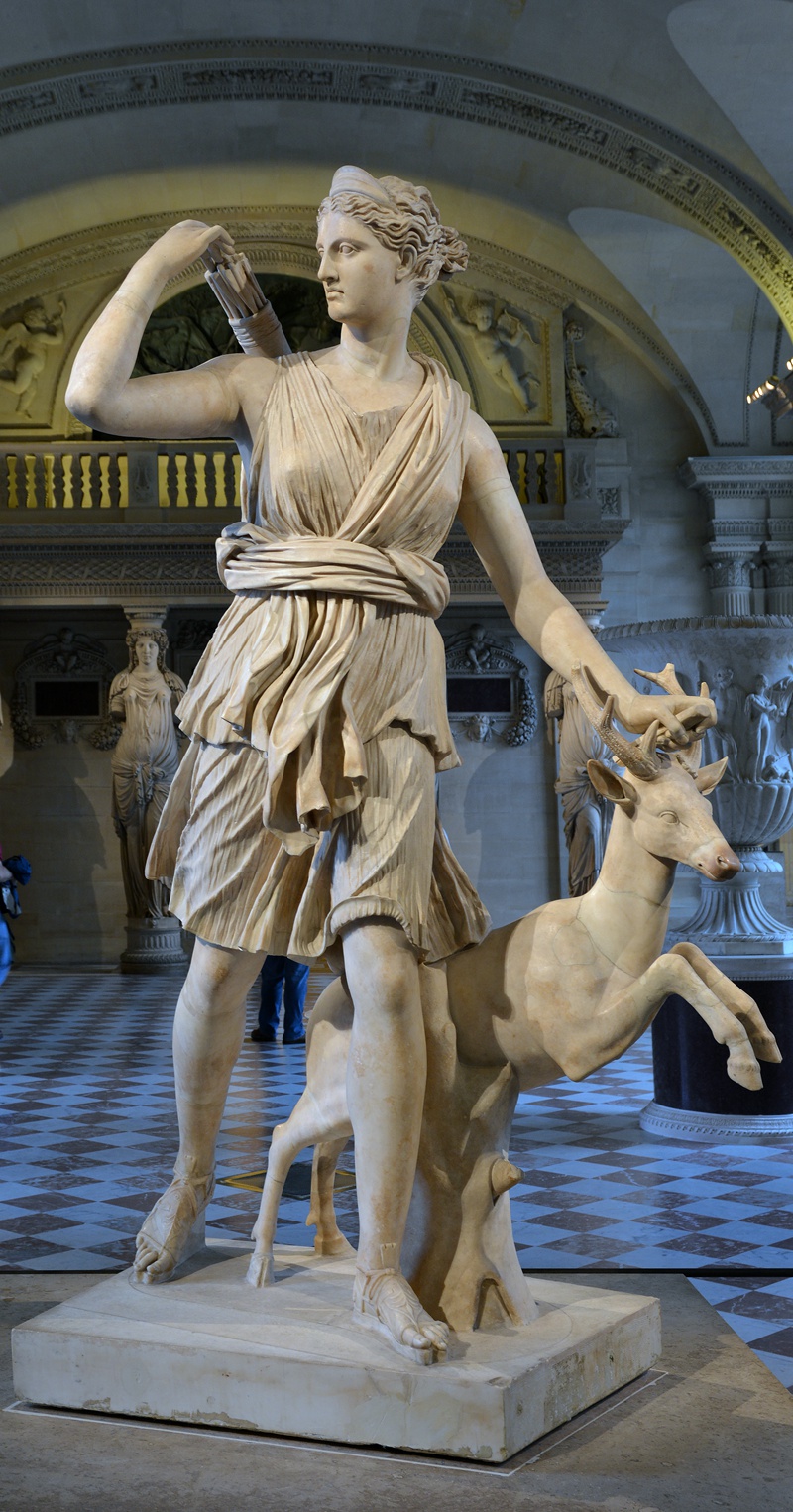
6. Diana of Versailles
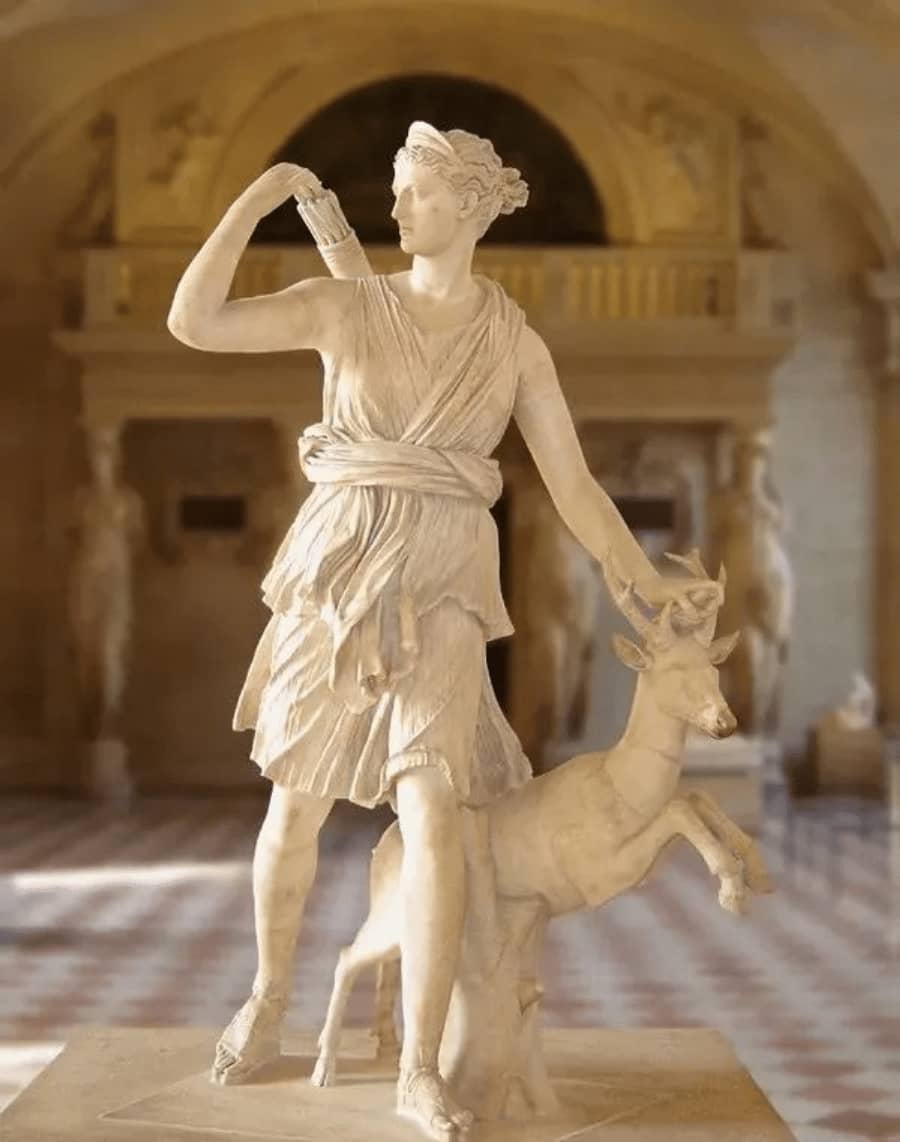
The Diana of Versailles is a Roman marble sculpture dating from the 1st or 2nd century AD, likely a copy of a lost Greek bronze original attributed to the Classical sculptor Leochares. It is now housed in the Louvre Museum in Paris and depicts Diana (Greek Artemis), the goddess of the hunt, wilderness, and the moon.
The statue shows Diana in a dynamic hunting pose, advancing with graceful energy as she reaches for an arrow from her quiver. A stag originally accompanied her, emphasizing her role as protector of wildlife and the hunt. Her body is rendered in an idealized classical style, with a balanced contrapposto stance, flowing drapery, and a strong sense of movement that contrasts with the calm dignity of her face.
7. Ganymede Abducted by the Eagle
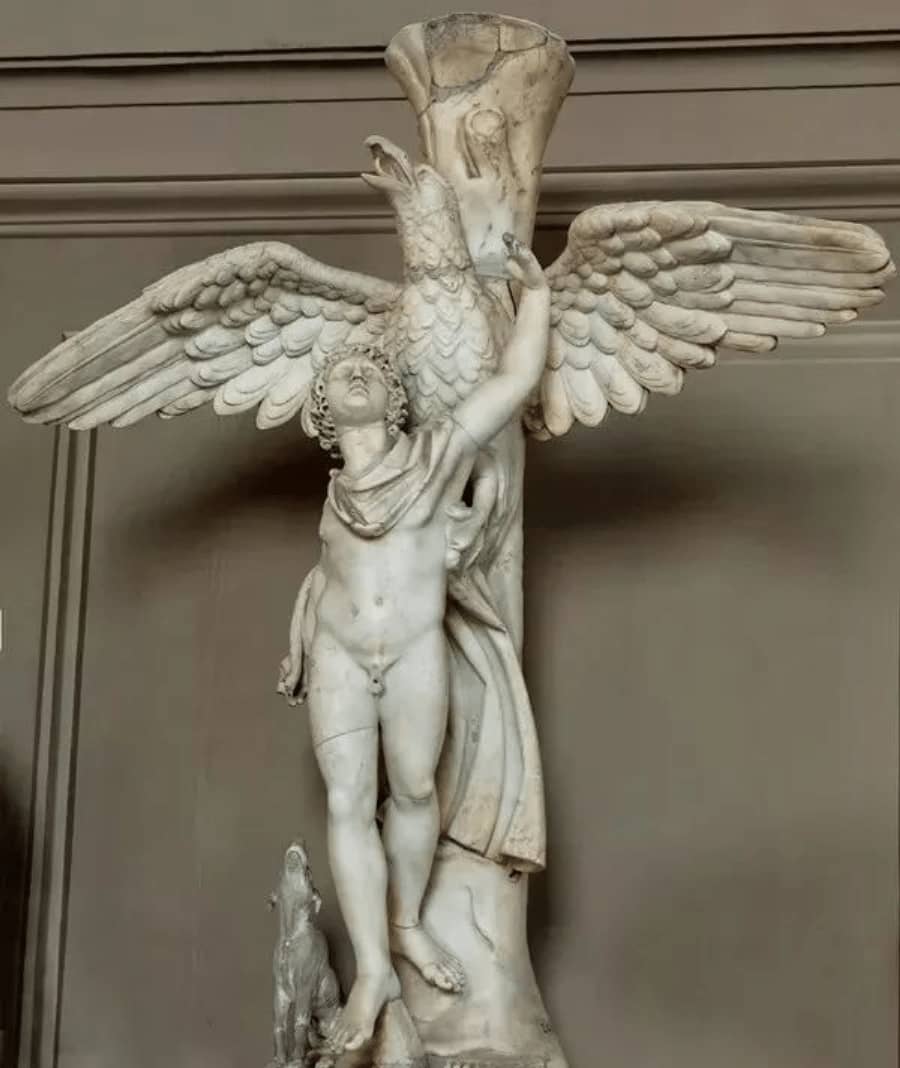
The Ganymede Abducted by the Eagle is a well-known theme in classical sculpture, most famously represented in Roman marble copies such as the version attributed to the workshop of Leochares or related Hellenistic traditions. It depicts the mythological moment when Ganymede, a beautiful Trojan youth, is taken to Mount Olympus by Zeus in the form of an eagle to serve as cupbearer to the gods.
The composition typically shows Ganymede being lifted or held aloft by a powerful eagle, emphasizing dramatic motion and emotional tension between divine force and human vulnerability. The youthful body of Ganymede is rendered with idealized proportions, reflecting classical Greek aesthetics of beauty, while the dynamic interaction with the eagle introduces strong narrative energy and movement.
8. Asclepius
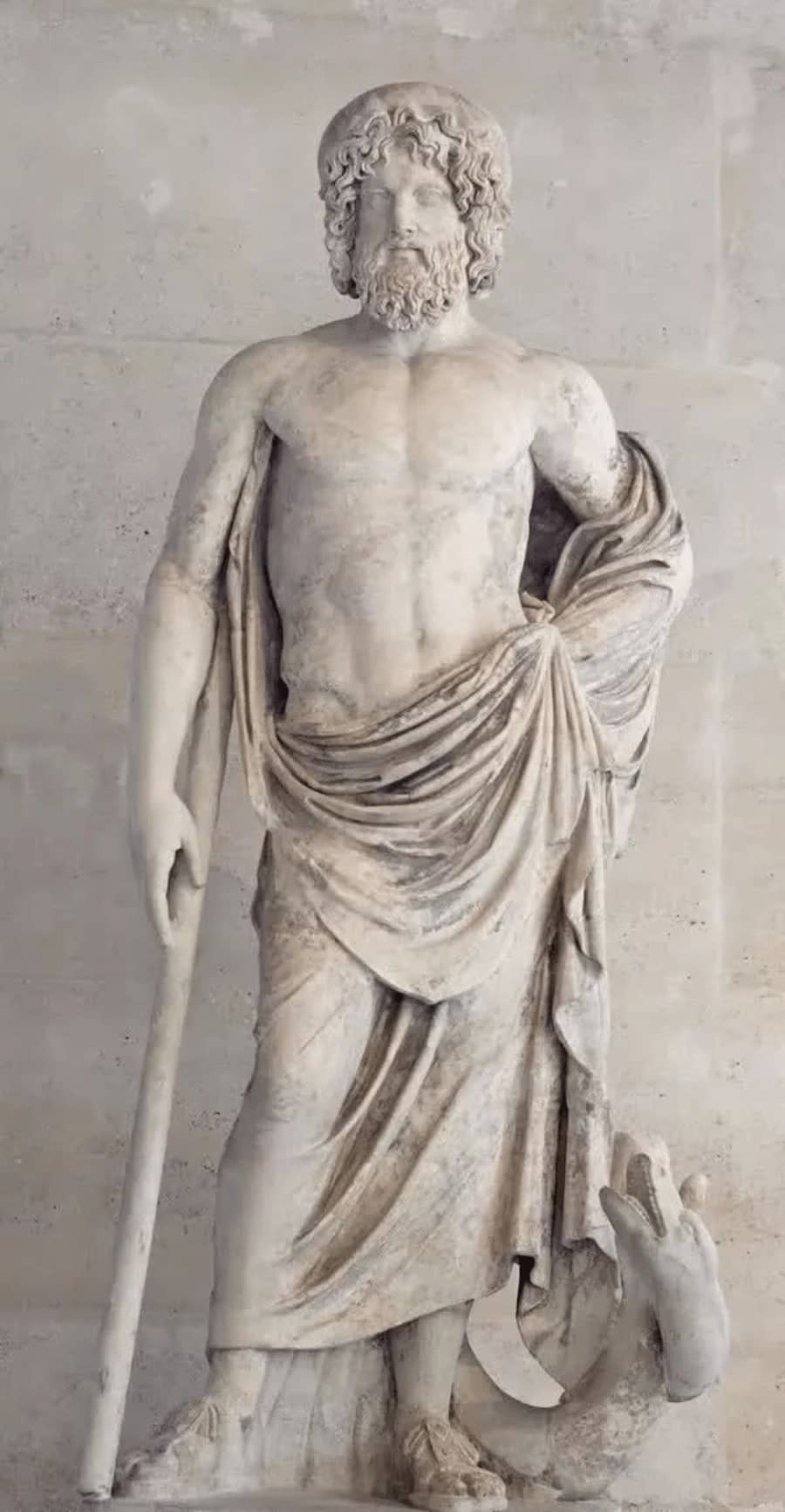
The god of medicine in Greek mythology was the son of Apollo. Sculptures often depict him with the Rod of Asclepius. Over time, this staff with a single entwined serpent became a symbol for various medical organisations worldwide.
9. Artemis (Huntress) Statue
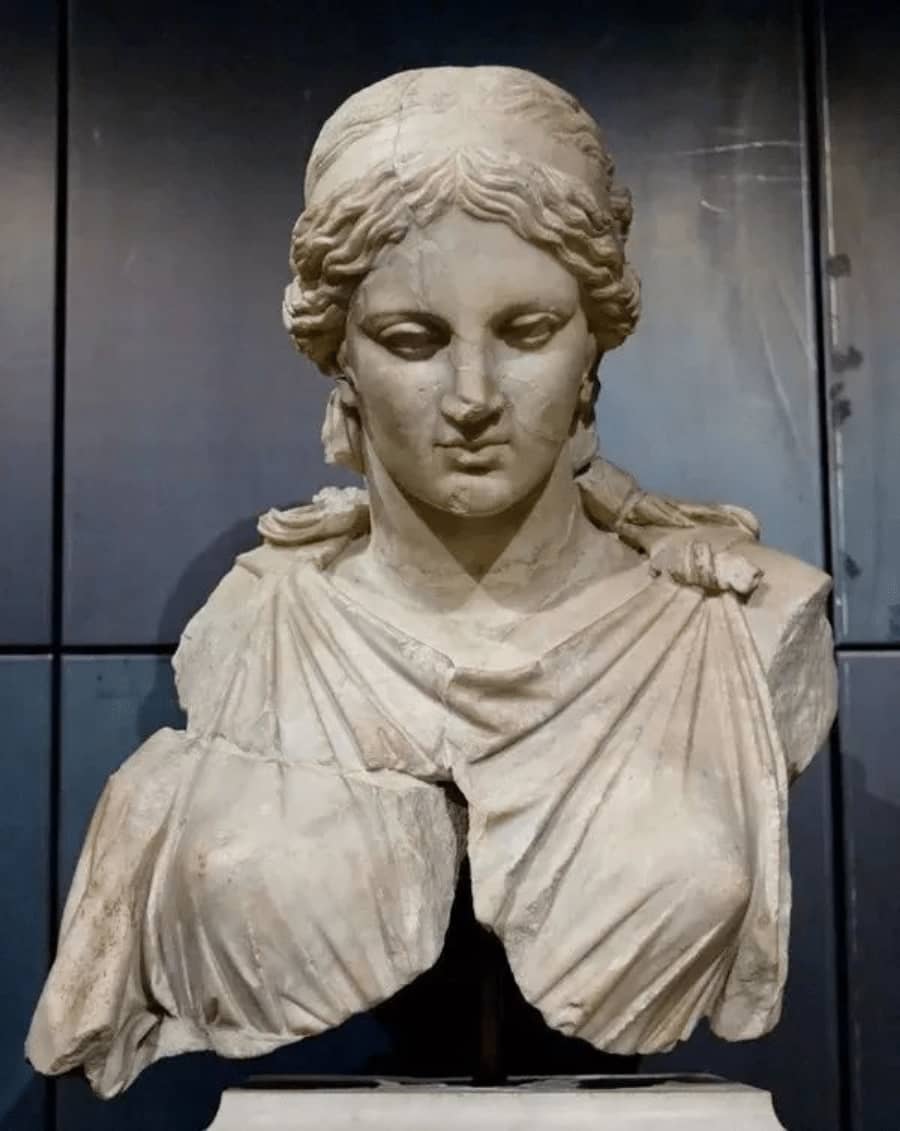
A Roman copy of a 4th-century BCE original by Kephisodotos. Discovered in 1873 in Rome’s Horti Vettiani, it’s currently housed in the Capitoline Museums.
10. Discobolus
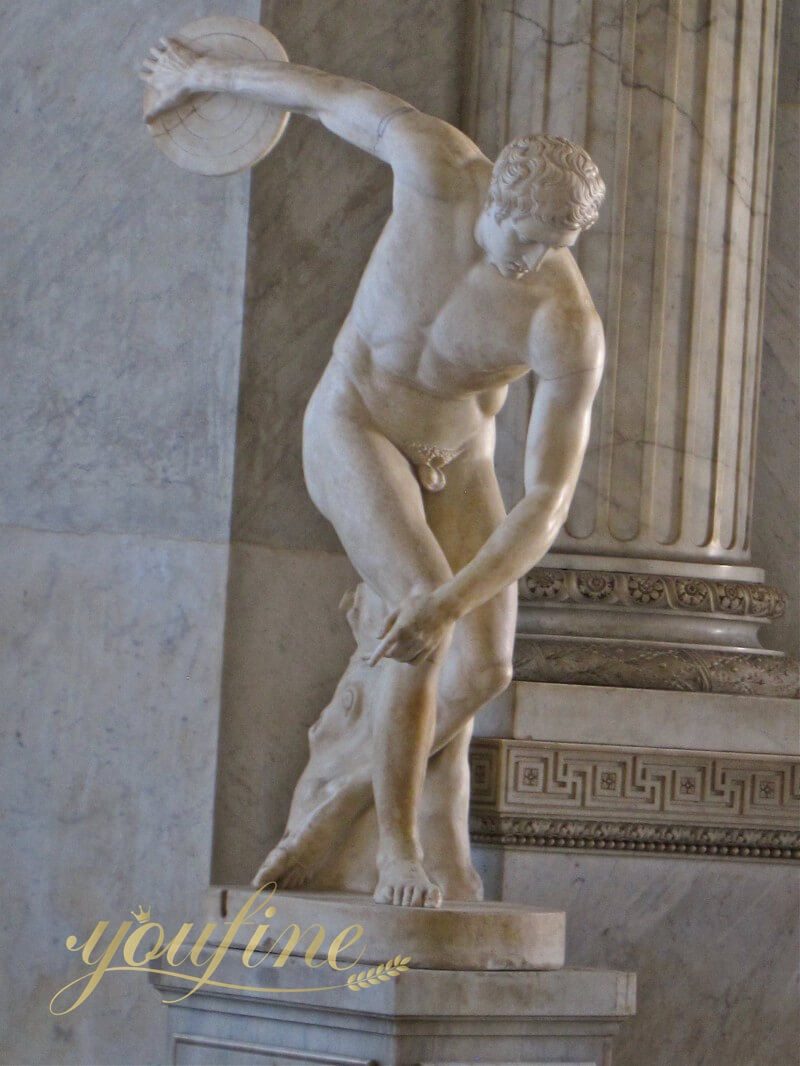
The Discobolus is one of the most famous ancient Greek sculptures, originally created by the sculptor Myron around 460–450 BC during the Early Classical period. The original bronze is lost, but several Roman marble copies preserve its iconic composition, the most celebrated version now housed in the Museo Nazionale Romano in Rome.
The statue captures an athlete in the instant before releasing a discus, frozen at the peak of physical tension and concentration. Myron’s composition is a masterclass in balanced dynamism: the body forms a flowing arc, uniting opposing directions of motion into a harmonious structure. Although the pose is highly complex, the figure remains visually stable and controlled, reflecting the Greek ideal of order within movement.
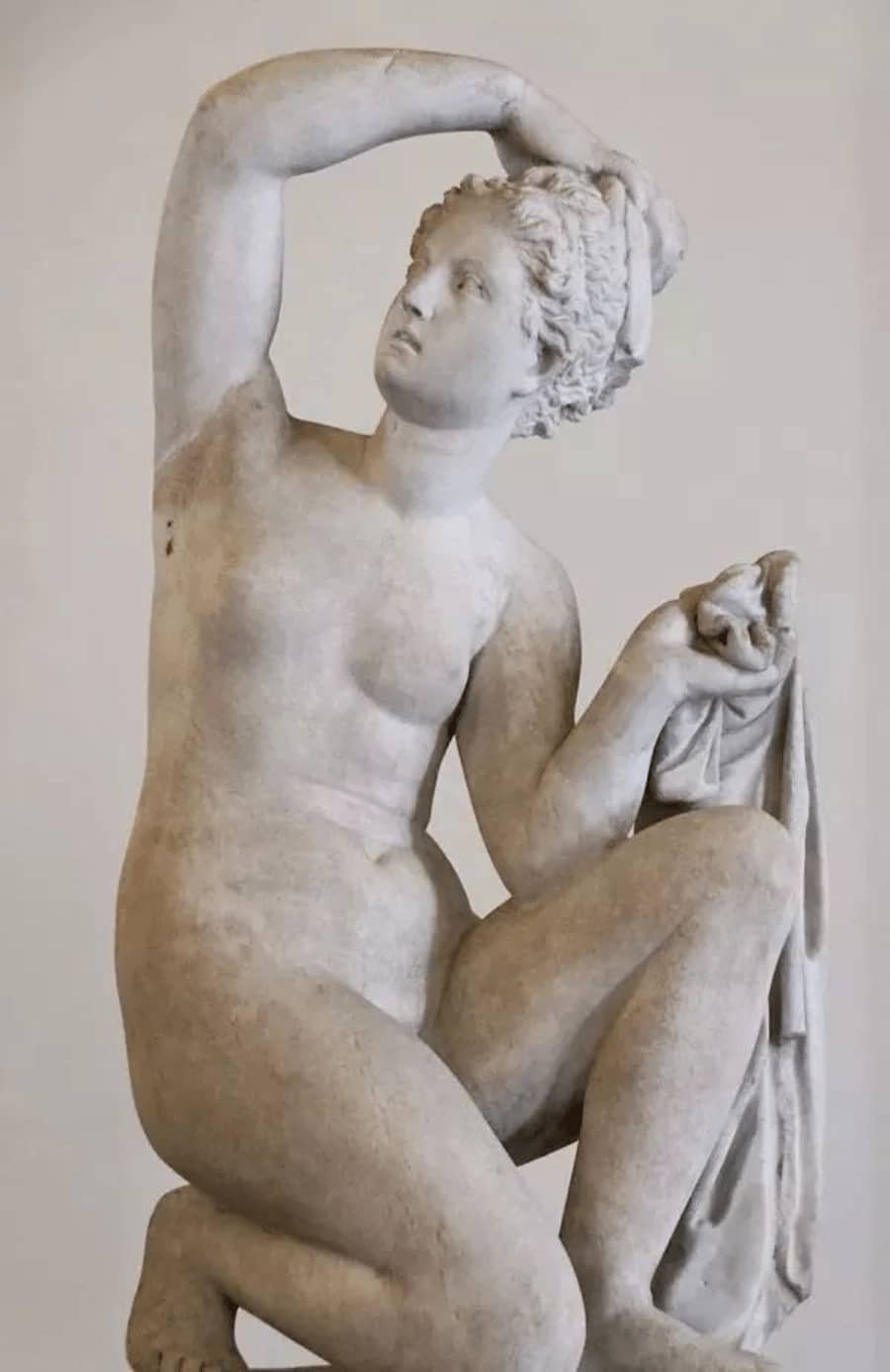
11. Crouching Aphrodite (Venus) of Palazzo Altemps
The Crouching Aphrodite, also known as the Crouching Venus, is a celebrated type of ancient Hellenistic sculpture depicting the goddess Aphrodite in a moment of private vulnerability. The Roman marble version housed in the Palazzo Altemps in Rome is one of the finest surviving examples of this composition, which was widely replicated in antiquity.
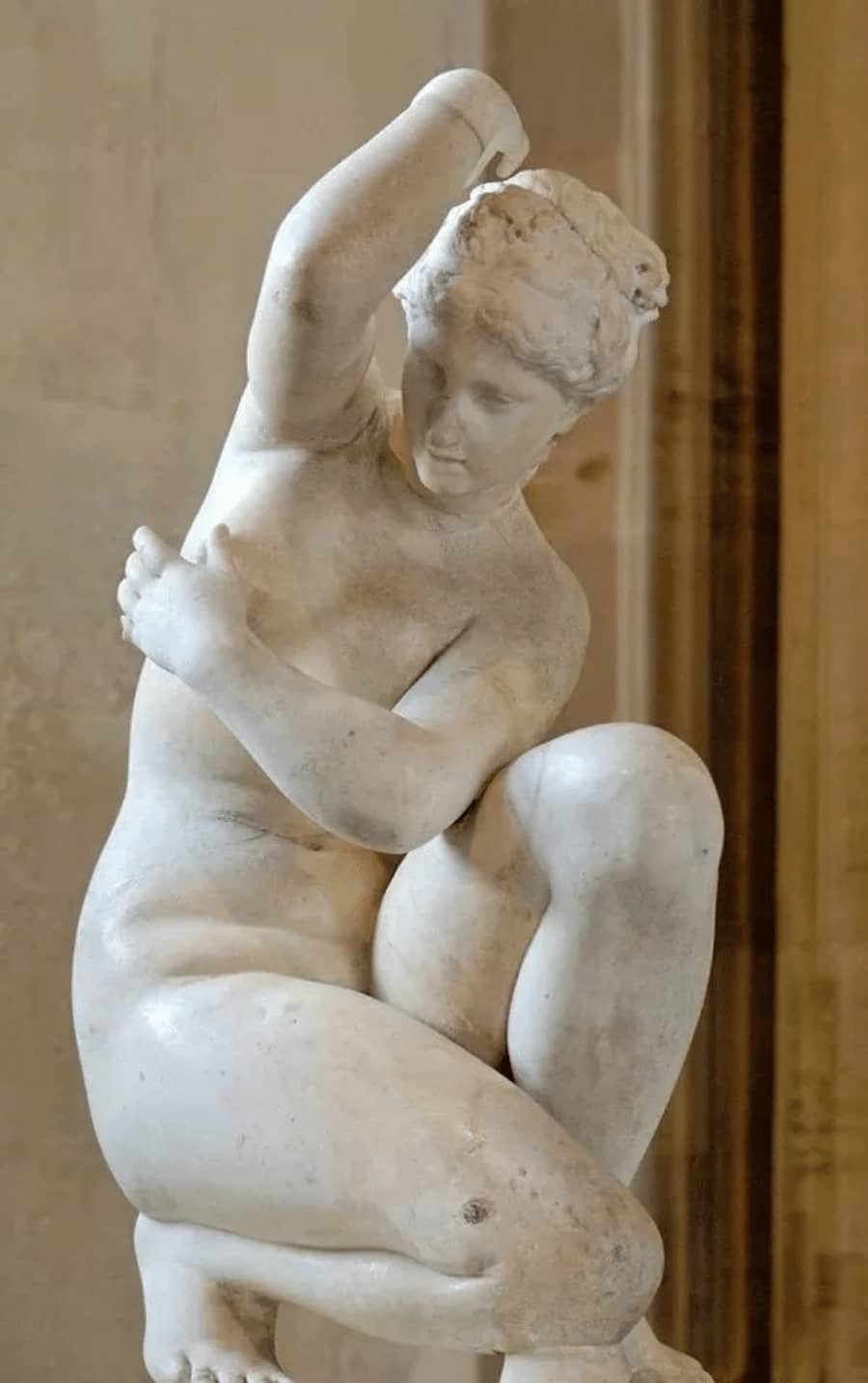
12. Crouching Aphrodite (Venus) of Louvre
The Crouching Aphrodite is a Roman marble copy of a Hellenistic original type attributed to the sculptor Doidalsas of Bithynia (3rd century BC). The version in the Louvre Museum is among the most well-known examples, representing the goddess Aphrodite (Venus) in an intimate, naturalistic moment.
13. Laocoön and His Sons
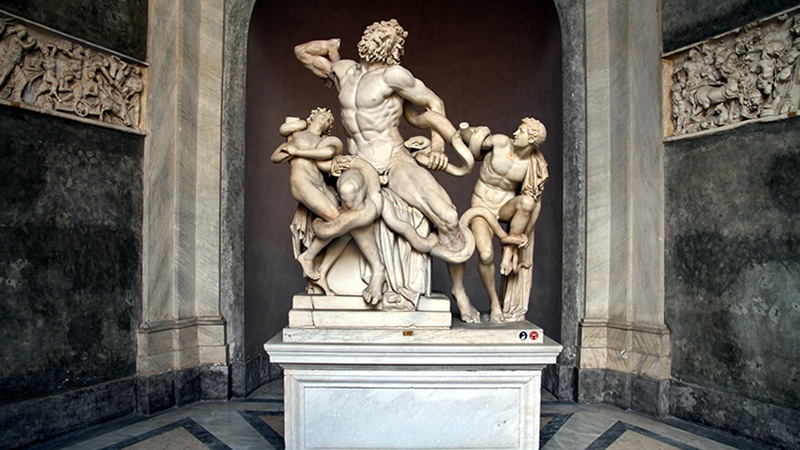
The Laocoön and His Sons is one of the most famous masterpieces of ancient Hellenistic sculpture, discovered in 1506 in Rome and now housed in the Vatican Museums. It is widely believed to be a Roman marble copy of a Greek original created by three sculptors from Rhodes—Agesander, Athenodoros, and Polydorus—dating to the 1st century BC.
The sculpture depicts the Trojan priest Laocoön and his two sons being attacked by sea serpents sent by the gods. The composition is highly dramatic, capturing intense physical struggle and emotional agony. The twisting bodies, strained muscles, and expressive faces create a powerful sense of movement and suffering, demonstrating the Hellenistic focus on extreme emotion and theatrical realism.
14. Giustiniani Athena
The Giustiniani Athena is a Roman marble copy of a lost Greek Classical original, often associated with the school of Phidias or his followers (5th century BC). It is named after the Giustiniani collection, where it was once housed, and is now part of the Vatican Museums collection.
The sculpture depicts Athena, the goddess of wisdom and war, standing in a calm and dignified contrapposto pose. She wears a finely carved helmet and a richly draped peplos, emphasizing both her martial authority and divine elegance. The figure combines strength and restraint—Athena is not shown in battle, but in a composed state of intellectual and strategic power, reflecting the Greek ideal of controlled divinity.
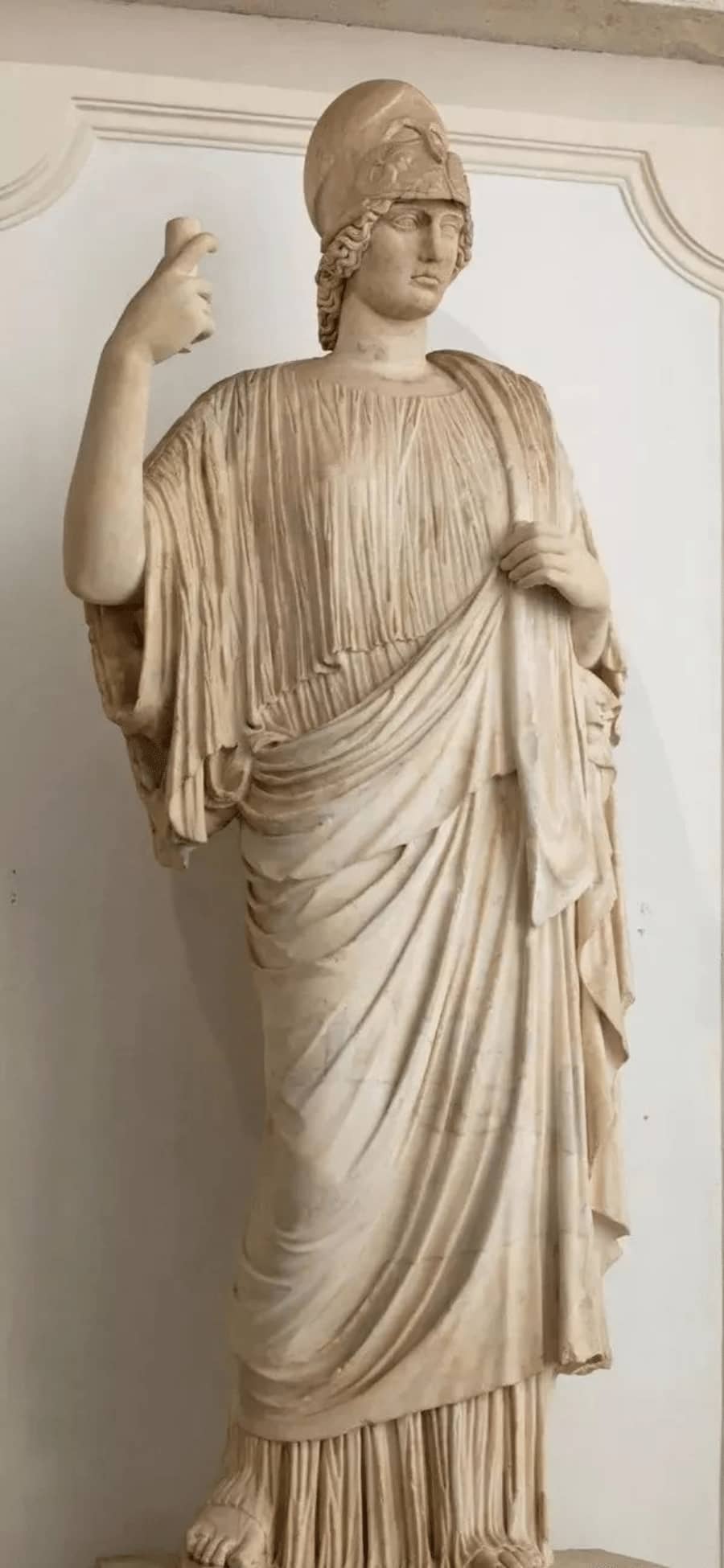
15. Athena of Mattei
The Athena of Mattei is a Roman marble copy of a lost Greek Classical original, generally dated to the 5th century BC and associated with the artistic tradition of Phidias. It is named after the Mattei collection and is now preserved in the Louvre Museum. The sculpture represents Athena, the Greek goddess of wisdom, strategic warfare, and civic order.
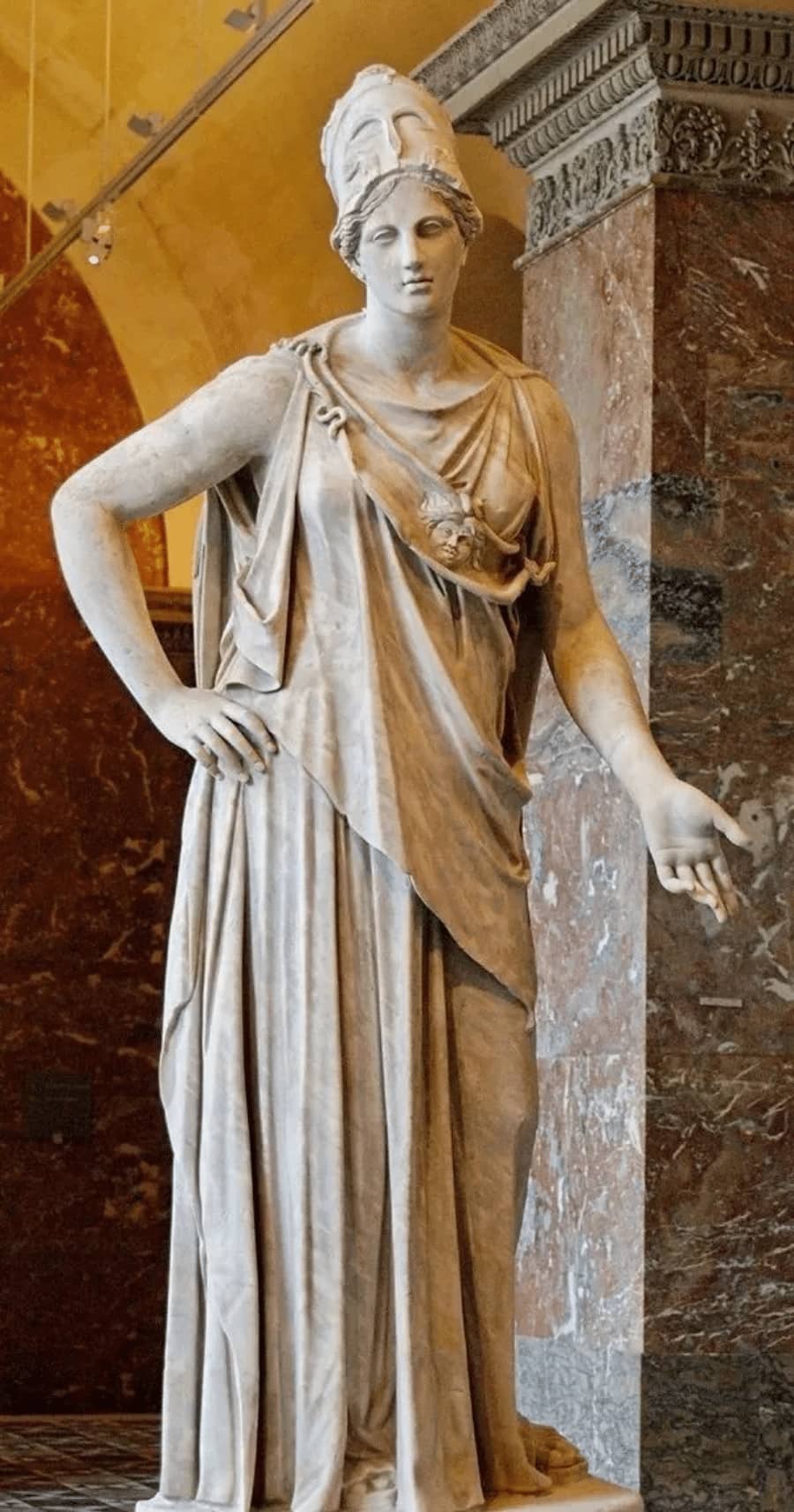
16. Athena of Piraeus
Thought to be from the 4th century BCE by either Kephisodotos or Euphranor, this sculpture can be found at the Piraeus Archaeological Museum in Athens.
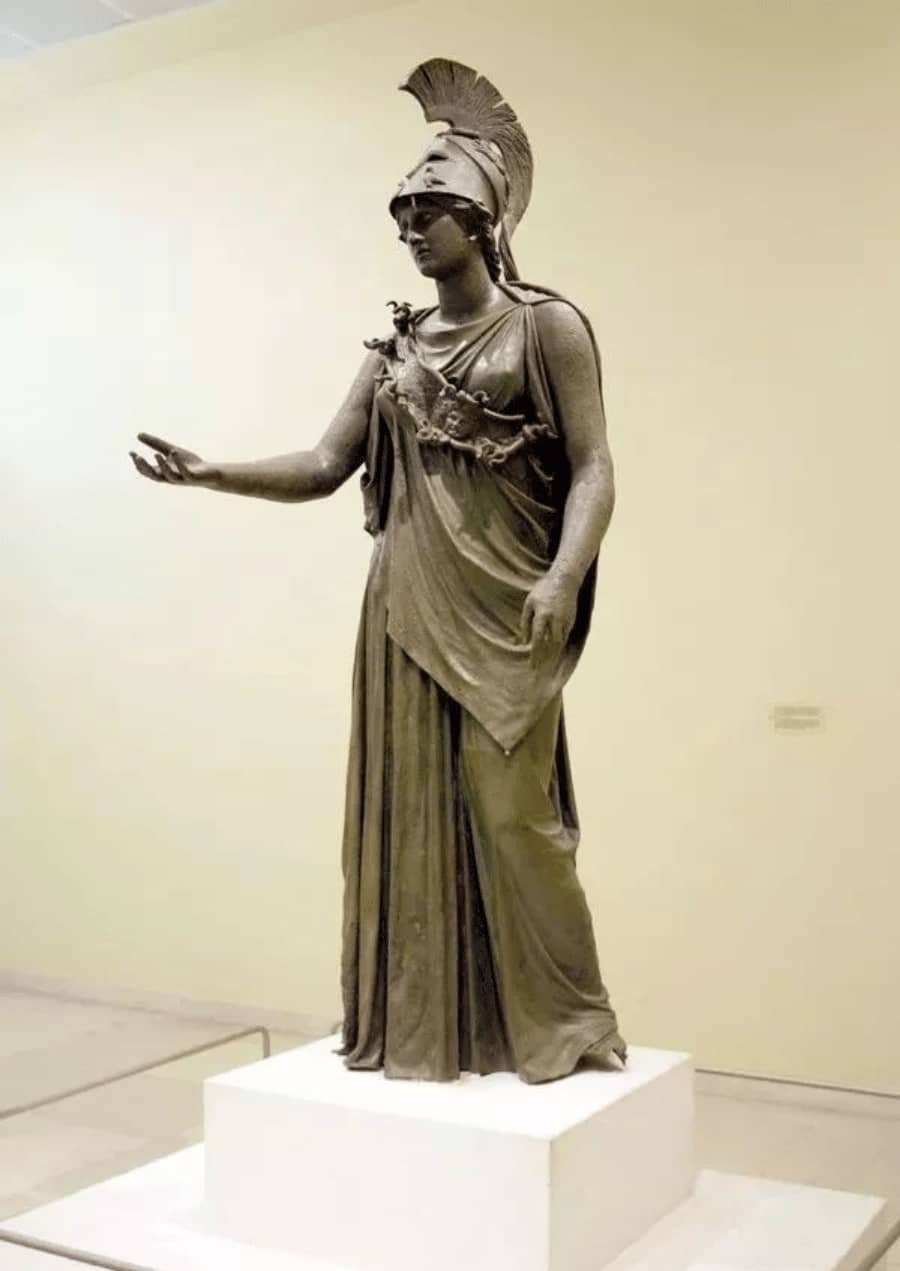
17. Winged Victory of Samothrace
The Winged Victory of Samothrace (also known as the Nike of Samothrace) is one of the most celebrated masterpieces of Hellenistic sculpture, created around 200–190 BC. It was discovered in 1863 on the island of Samothrace in the Sanctuary of the Great Gods and is now prominently displayed in the Louvre Museum in Paris.
The sculpture represents Nike, the Greek goddess of victory, landing on the prow of a warship. Although the head and arms are missing, the figure is renowned for its extraordinary sense of movement and dramatic energy. The windswept drapery clings to the body, revealing powerful anatomical structure beneath while simultaneously suggesting motion, wind, and triumph. The composition creates a striking contrast between dynamic movement and monumental stability.
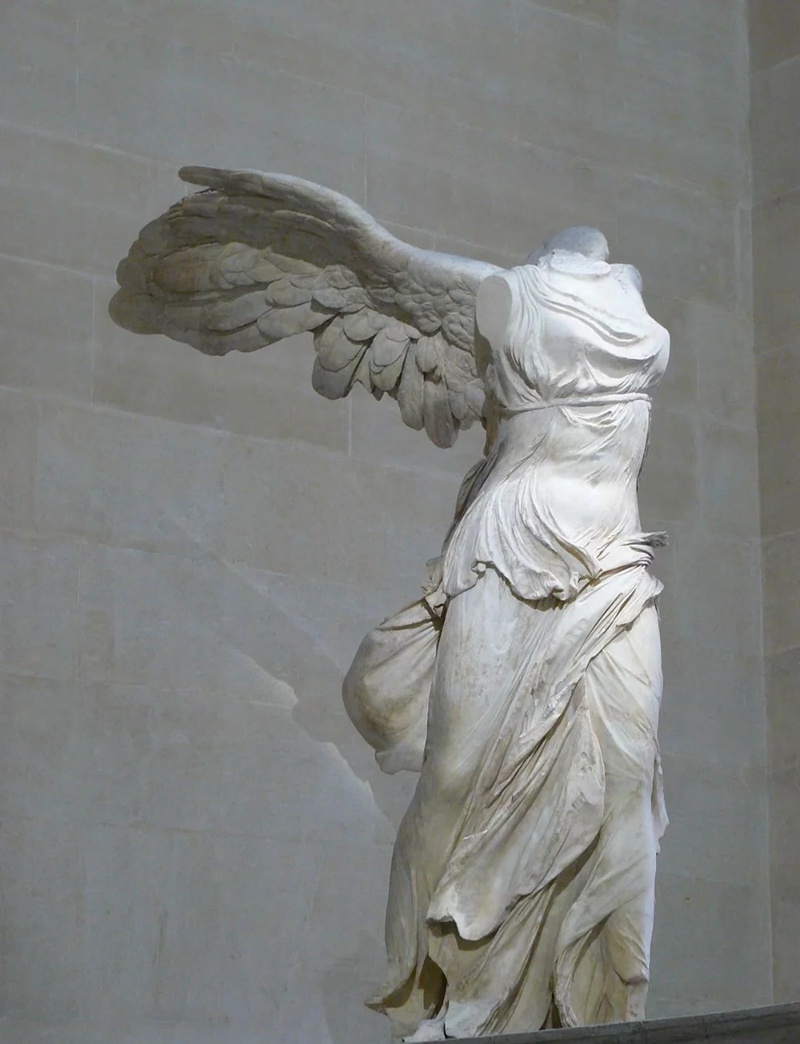
18. Borghese Gladiator
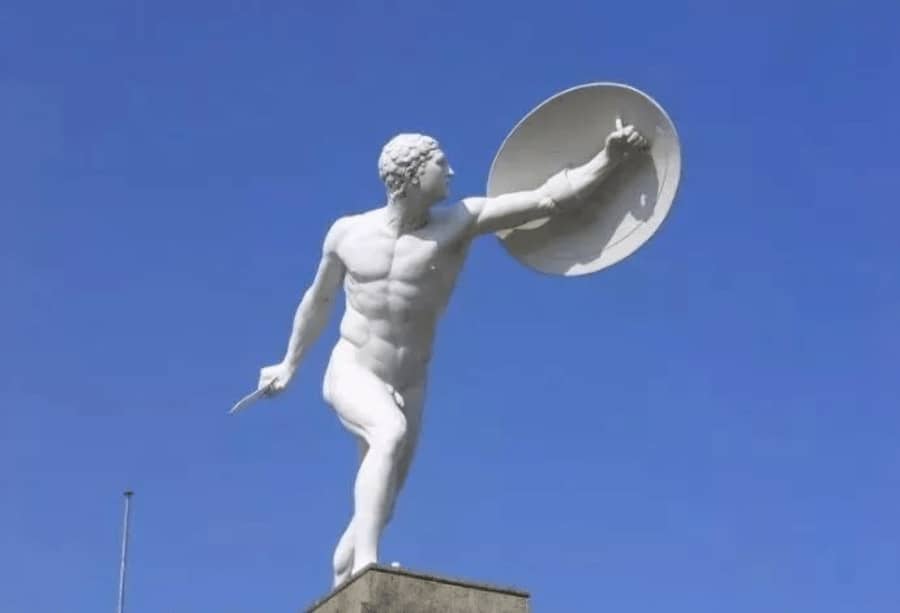
The Borghese Gladiator is a famous Hellenistic Greek sculpture, dating to around the 1st century BC and attributed to the sculptor Agasias of Ephesus (based on an inscription found on the statue). It is now housed in the Louvre Museum in Paris and is considered one of the most dynamic examples of ancient Greek bronze tradition, though the surviving version is in marble.
The sculpture depicts a warrior in intense combat, originally interpreted as a gladiator but now widely believed to represent a Greek hero fighting on foot against a mounted or armed opponent. The figure is shown in a fully extended fighting stance, with the body twisting in a powerful spiral composition. The musculature is highly detailed, emphasizing tension, agility, and immediate action, which are key characteristics of Hellenistic art.
19. Dying Gaul
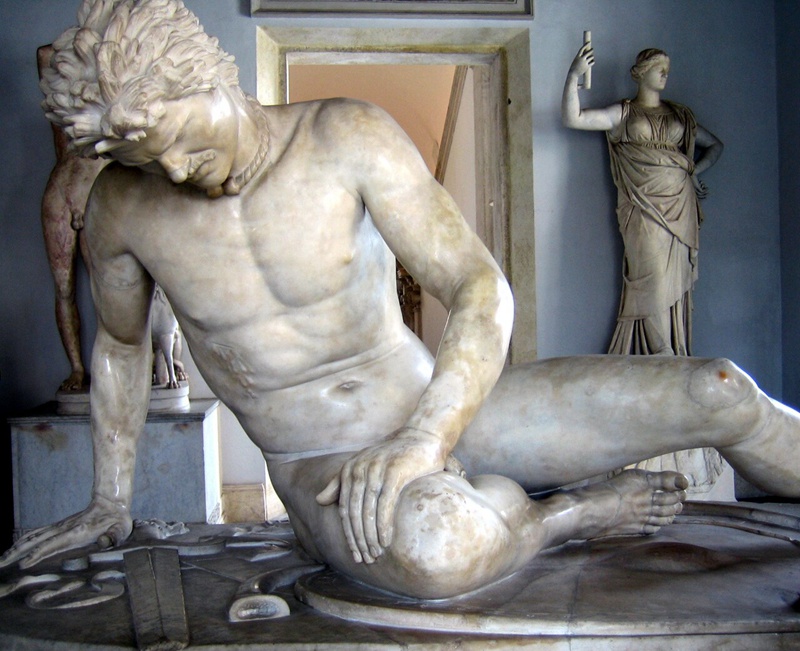
The Dying Gaul is a renowned ancient Hellenistic sculpture, believed to be a Roman marble copy of a lost Greek bronze original created in the 3rd century BC, possibly commissioned by Attalus I of Pergamon to commemorate victories over the Galatians. It is now housed in the Capitoline Museums in Rome.
The sculpture depicts a wounded Gallic warrior in his final moments, collapsing to the ground while still maintaining dignity and composure. His body shows realistic anatomical detail, including visible wounds and strained musculature, while his expression reflects both physical pain and emotional resignation. The composition combines naturalistic observation with deep psychological sensitivity, a hallmark of Hellenistic art.
20. Apollo with the Lyre
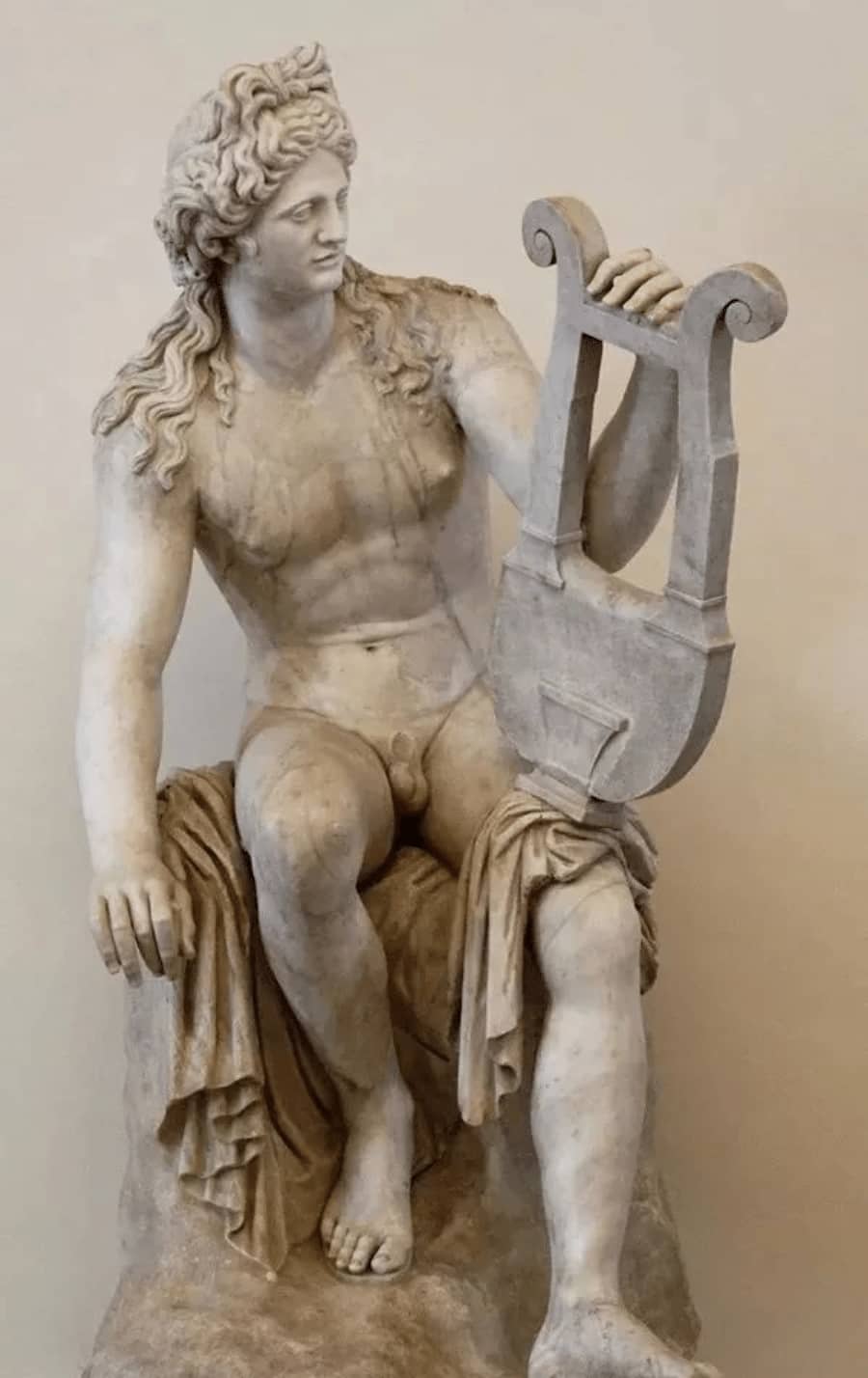
Apollo with the Lyre is a Roman marble sculpture based on a lost Greek original, traditionally associated with the Classical tradition of the 4th century BC, possibly linked to Praxiteles’ workshop or related circles. It is now preserved in the Vatican Museums and depicts Apollo, the Greek god of music, harmony, prophecy, and the arts.
21. Farnese Bull
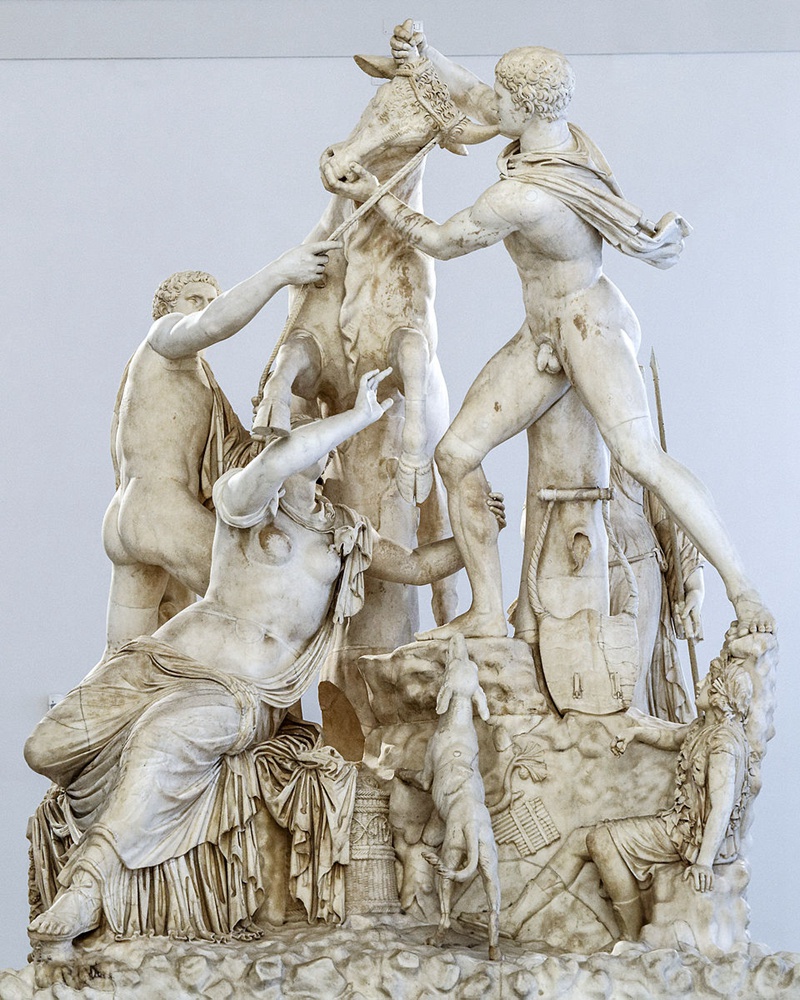
The Farnese Bull is one of the largest and most complex surviving sculptures from antiquity, a Roman marble group dating to the 3rd century AD. It is now housed in the National Archaeological Museum of Naples. The work is believed to be a copy or adaptation of a Hellenistic original, possibly created by the Rhodian sculptors Apollonius and Tauriscus.
The sculpture depicts the dramatic myth of Dirce being tied to a wild bull by Amphion and Zethus as punishment for her cruelty toward their mother. The composition is highly theatrical and multi-figured, with dynamic interlocking bodies, twisting poses, and intense emotional expression. The bull at the center acts as a powerful focal point, driving the chaotic movement of the entire group.
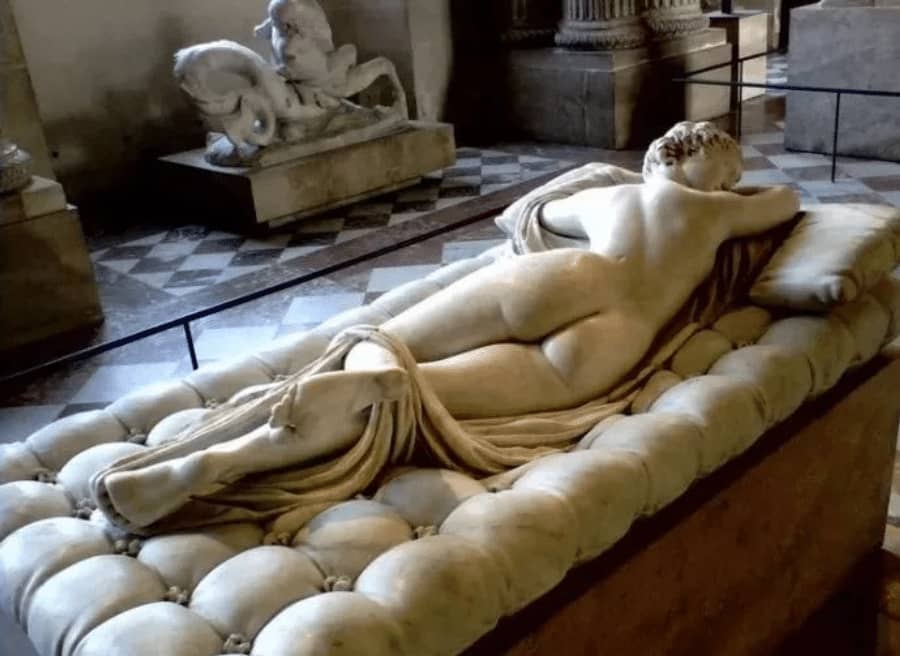
22. Sleeping Hermaphrodite
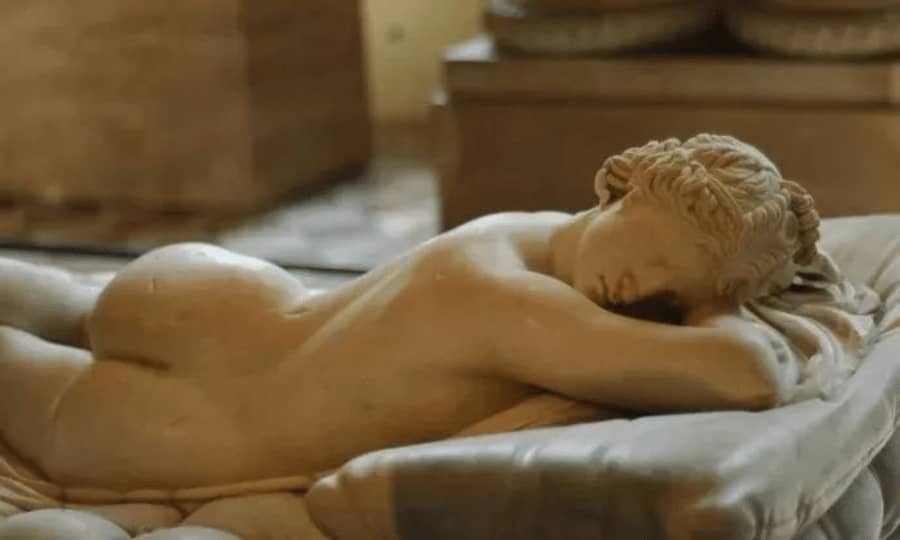
Hellenistic sculpture, 2nd century AD, Roman copy, restored by David Lalique in 1619, marble mattress added by Bernini in 1619. Now in the Louvre.
The sculpture depicts Hermaphroditus, the mythological child of Hermes and Aphrodite, in a reclining sleeping pose. At first glance, the figure appears to be a sensuous female nude, but upon closer observation, the androgynous nature of the body becomes evident. The twist of the torso, soft modeling of the flesh, and naturalistic drapery beneath the body create a highly sensual yet ambiguous composition.
Well, that wraps up our discussion on sculptures for today, everyone. It’s probably evident by now, but we are genuinely captivated by these masterpieces. Sculpting is truly an art to be revered, and thanks to the Greeks, we continue to appreciate it even today!
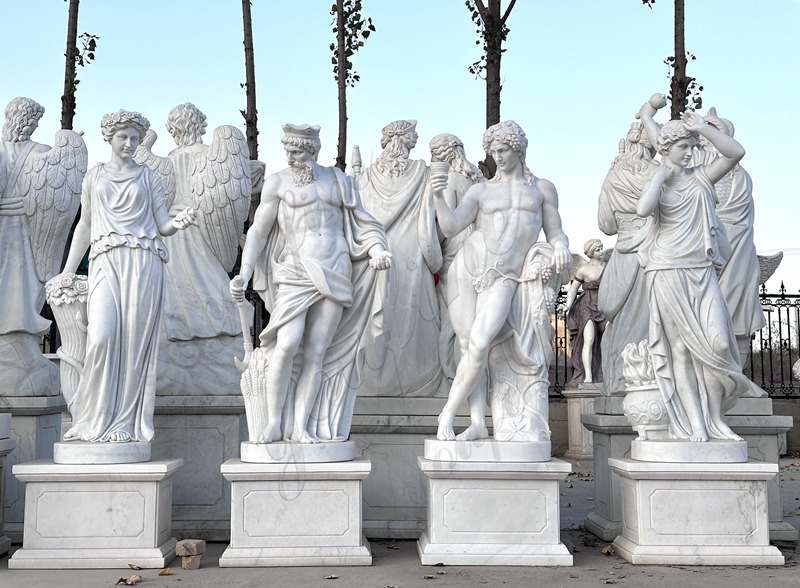
If you’re considering a classic marble sculpture or a famous Greek sculpture replica for your home or estate, don’t hesitate to contact us. We’re here to assist! We could make these sculptures in marble and bronze. Alternatively, head over to the YouFine website to browse a curated collection tailored just for you!
FAQ
1. What materials did ancient Greeks use for sculpture?
Ancient Greek sculptors mainly used marble and bronze. Marble was favored for temple decoration and large statues, while bronze was widely used for freestanding figures because it allowed more dynamic poses. They also used limestone and occasionally gold and ivory in composite works.
2. Where can I see ancient Greek statues today?
Many original and Roman-copied Greek sculptures are displayed in major museums such as the Acropolis Museum in Athens, the Louvre Museum in Paris, the British Museum in London, and the Vatican Museums in Rome. These institutions hold some of the most important surviving works of Greek art.
3. What is the difference between Greek and Roman statues?
Greek statues focus on idealized beauty, balanced proportions, and expressive natural movement, while Roman statues often emphasize realism and individual portraiture. Romans frequently copied Greek originals, but also added more detailed facial features and historical or political context, especially in portrait busts and imperial imagery.
4. Are classical Greek statues available as modern replicas?
Many workshops and sculpture factories produce high-quality replicas of famous Greek statues such as Venus de Milo, Discobolus, and Winged Victory of Samothrace. These are commonly made for museums, gardens, luxury villas, and public spaces.
5. What materials are used for replica Greek sculptures today?
Modern replicas are usually made from marble, bronze, resin, or fiberglass. Natural marble and bronze are considered premium options because they closely match the appearance and durability of original ancient sculptures.
6. Are museum-quality replicas accurate to the originals?
High-end replicas are often based on 3D scanning, historical research, and museum references, ensuring high accuracy in proportion and detail. However, restoration choices and missing parts in originals may result in slight artistic interpretation.
7. How long does it take to produce a custom Greek-style sculpture?
Production time depends on size and material. A marble or bronze replica may take several weeks to several months, especially for life-size or highly detailed museum-grade pieces.